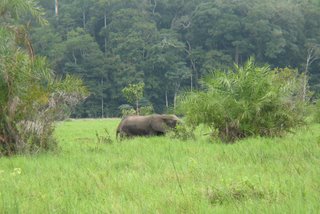
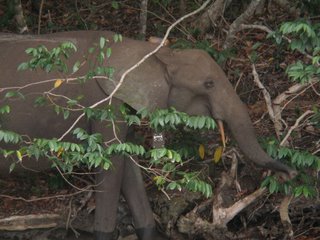
I find the forests here absolutely mesmerizing. As we motor along the lagoons and rivers I am amazed at the size of the trees, with trunks that can easily reach 10 feet thick. In Evaro (inland) the roots of the trees are gnarled and look like something out of a Tolkien story; the forest seems enchanted. The water level rises and falls 3 meters or more between wet and dry seasons there. In coastal areas the forests seem positively primordial and I expect at any moment to see a dinosaur or prehistoric man peeking out of the dense growth. They are teeming with life- as we ride along rivers, birds and butterflies of incredible jewel colors flit everywhere, elephants and water buffalo wade into the river, baby crocs peek out from the shore under trees, and large fish roll at the surface.
 Tree at Evaro, note water line
 Forest on the Rembo Rabi, Loango National Park
When I came to Gabon I knew that the national parks had only been established a few years ago and I assumed that there would still be some lingering issues, such as poaching in areas where people had hunted bushmeat forever, but that are now protected. I had heard quite a bit about the bushmeat issue and the lack of commitment and ability by the Gabonese government to enforce laws in huge remote areas. Unfortunately the EcoGuides don’t have law enforcement status here, they can only report violations to the police who often can’t or won’t do anything about it. Hopefully that situation will change, but apparently for now the president only allows the army and police to have guns, because he fears a coup.
What I did not expect, was the reality of oil concessions. A Chinese oil company, Sinopec, is currently testing for oil reserves all throughout Loango national park. This involves dynamite blasts that are set in both the forest and the lagoon and triggered remotely. It appears that they paid off a minister in the Gabonese government who gave them an oil concession with boundaries that are pretty much the same as the national park boundaries. The minister of energy did not tell the minister of the environment, and unfortunately the Chinese have been blasting here since May. It’s a complicated issue as Gabon wrestles with the temptation of oil wealth vs. its commitment 4 years ago to protect its natural treasures by establishing 13 national parks. And no one seems to know what president Bongo knows or thinks of the situation. Sinopec brought in a bulldozer and opened up an old logging road, then established a camp of 200 workers within the park. There are huge concerns about the impact to the wildlife, not just from the blasting but from poaching to feed the workers. And the blasting is the worst part. There are researchers living in the forest with the gorillas and chimps who fear for their safety and that of the apes. They hear hundreds of blasts a day and the blasts are getting closer. A tourist boat in the lagoon witnessed a blast (the tourists actually thought it was a whale, which is sort of funny, but not really). When I went to the southern end of the lagoon this week, we heard at least 25 blasts in the distance, and saw flagging tape markers known to be Sinopec’s and areas where lots of trees had been cut down. It is very disturbing to say the least.
Then as we were boating back to the lodge on Sunday, we found a fresh dead manatee in the lagoon. It was bleeding from the nose and had a shark bite out of its lower back, but I think the shark bite was likely post-mortem (there are bull sharks in the lagoon here). We towed the carcass to shore and took some photos, measurements and a genetic sample, but I didn’t have tools with me to do a proper necropsy. I plan to return to it in a couple days, but I’m not sure if I will be able to determine a cause of death. I’ve written a colleague of mine in the US who studies barotrauma in cetaceans (in layman’s terms that means he studies the effects of trauma to the auditory system of whales, for example in cases where groups of whales strand dead after Navy test bombing in the area). I’m hoping he can give me some advice about what to look for when I cut the manatee open. I hope it died of natural causes, but for now I worry that it may be the first recorded victim of blasting in the lagoon.
Click here to read more about Sinopec in Gabon
By the way, some other articles I’ve read say that Sinopec has stopped their activities here, but as I sit here in the park, I can tell you that is simply not true. Let’s hope they are pressured to do so soon.  A West African manatee face, but sadly it's dead.

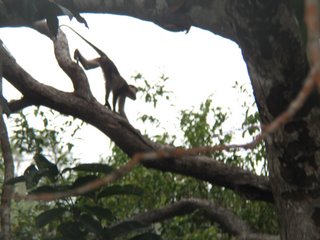
 We also saw a troop of 40 or so monkeys bounding through the trees. Hard to get a good picture in the rain, and they don’t exactly stay still! I need to look up the species.
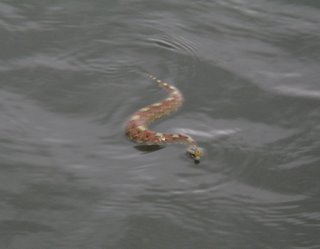
 And in the afternoon we encountered a Gabon Viper swimming across the lagoon. It was only about a foot long and had the most beautiful color pattern, as you can see. Apparently they have the longest fangs of any snake in the world and their bite can be deadly.
 I’d like to say that the picture is blurry for artistic purposes, but its tough shooting from a rocking boat at sunset!
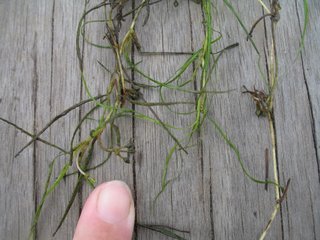 Manatee salad
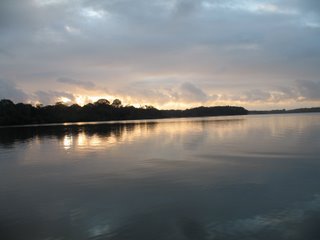 Sunset on the lagoon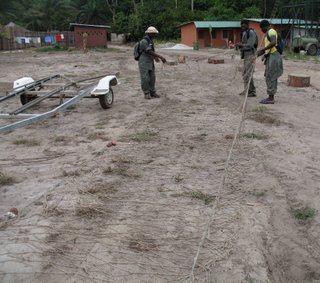
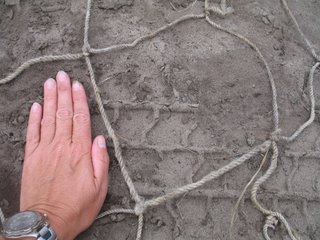
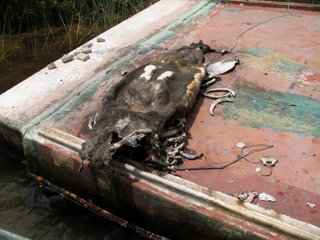 This may not look exciting to many of you, but given how few complete West African manatee skeletons there are for education and scientific study, this is a gold mine!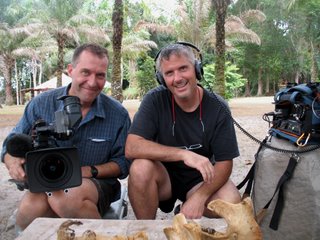
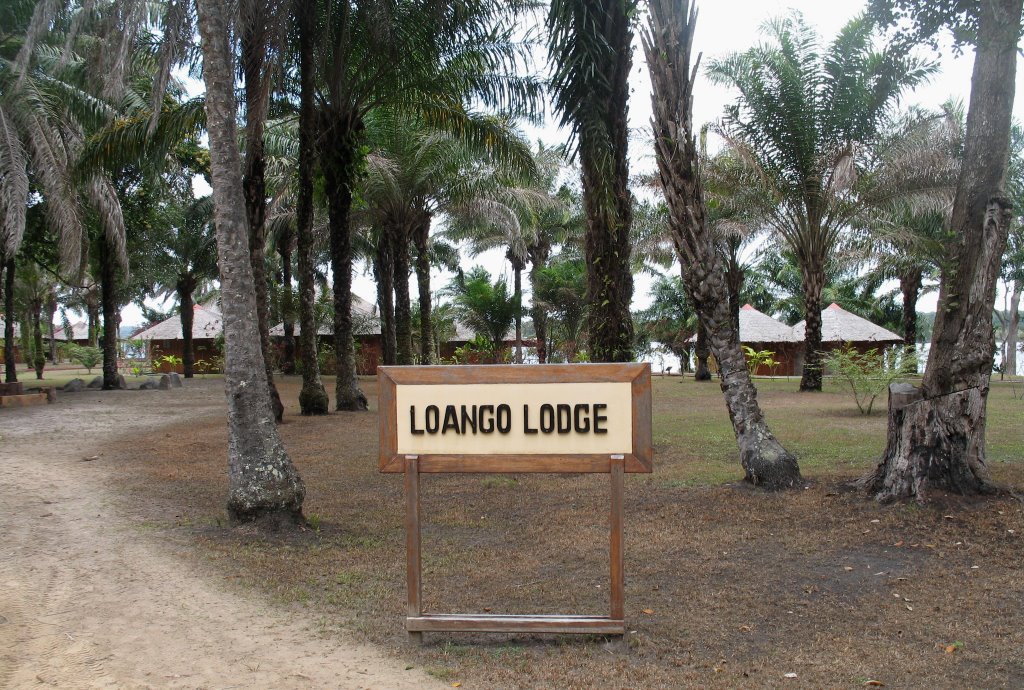
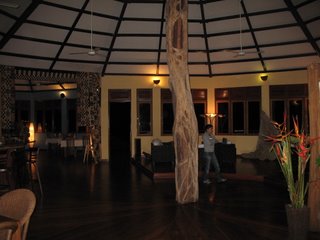 The main building. Guest dining room is on the left, salon area on the right. The bar and staff dining area (convienently near the bar!) is below.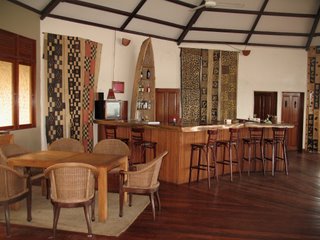
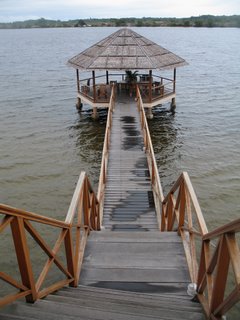 The gazebo out on the lagoon.
 The scientist's quarters, very comfortable!
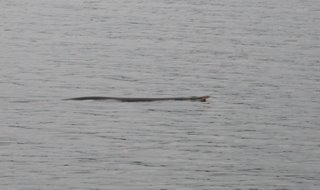 Snake swimming on the lagoon. It was about 3 feet long. I am not sure of the species, it wasn't in the reptile book here. Anyone have any ideas? Click on the photo to enlarge it and see the markings on it's head.